
DOOH: The Evolution of Advertising in the Public Sphere | Adgrid Media
 by
by 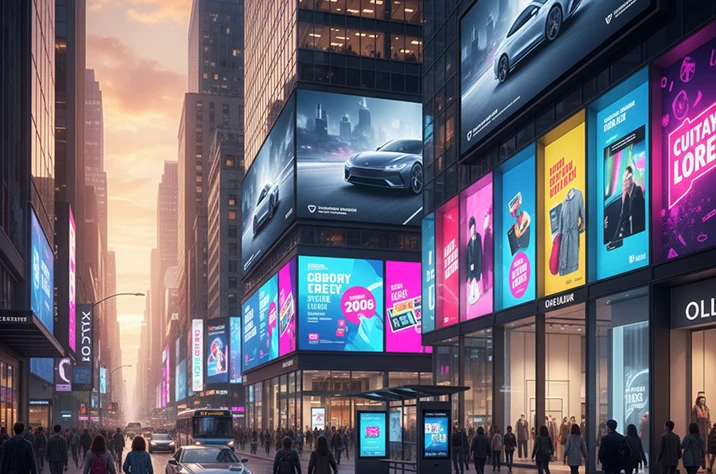
Digital Out-of-Home (DOOH) refers to digital media displayed in public places. It is the modern evolution of traditional Out-of-Home (OOH) advertising, such as printed billboards and transit posters, replacing them with dynamic digital screens.
This technology allows advertisers to communicate with consumers when they are away from home, utilizing real-time data, flexibility, and high-impact visuals.
Key Components of DOOH
DOOH is not just about big screens; it is a networked system that encompasses various types of displays and locations:
1. Form Factors and Locations
- Digital Billboards: Large, high-brightness LED screens located on highways and major arteries (similar to traditional billboards).
- Transit Displays: Screens placed in public transport hubs, including subways, buses, trains, and airports. These often use high-definition LCD or fine-pitch LED screens.
- Retail/Point-of-Sale (POS): Smaller displays within stores, at checkout counters, or in mall directories, designed to influence purchase decisions.
- Street Furniture: Digital screens integrated into public amenities like bus shelters, newsstands, and interactive kiosks.
- Media Facades: Entire building exteriors covered with Mesh or Transparent LED technology, turning architecture into a massive video canvas.
2. Technological Capabilities
- Programmatic DOOH (pDOOH): This is the game-changer. It allows advertisers to buy ad space automatically through software, often in real-time. Instead of buying a screen for a whole month, they can buy specific time slots based on data triggers.
- Contextual Triggers: Ads can change based on external factors like weather (e.g., umbrella ads when it rains), time of day (coffee ads in the morning), or local events.
- Audience Measurement: Modern systems use non-intrusive technology (like cameras or Wi-Fi pings) to estimate the number of viewers and their demographics, providing advertisers with data akin to online metrics.
- Interactivity: Some displays include QR codes, near-field communication (NFC), or touch capabilities, allowing consumers to interact directly with the ad using their mobile devices.
Why DOOH is the Future of Public Advertising
- Flexibility and Speed: Content can be updated instantly across an entire network. A brand can launch a campaign or correct an error in minutes, not weeks.
- High Impact: Large-format, vibrant LED screens are nearly impossible to ignore and create memorable brand experiences.
- Data-Driven Precision: Unlike static billboards, DOOH can optimize campaigns based on real-time data, ensuring the right message reaches the right audience at the ideal moment.
- Creative Freedom: DOOH supports full-motion video, animated graphics, and even 3D anamorphic effects, offering boundless creativity not possible with print.
DOOH leverages digital technology to create a measurable, dynamic, and highly engaging advertising channel that bridges the gap between digital and physical consumer experience.
Post you may like
 The Age of Digital Marketing: Transforming How Businesses ConnectDecember 1, 2025
 Your Guide to the Next-Generation LED Display TechnologiesDecember 1, 2025
 The New Era of LED AdvertisingDecember 1, 2025
 Beyond the Billboard: Technologies Rewriting the DNA of AdvertisingDecember 1, 2025
 How LED Screens Can Revolutionize Business AdvertisingDecember 1, 2025