
The New Era of LED Advertising: Dynamic, 3D & Programmatic OOH | Adgrid Media
 by
by 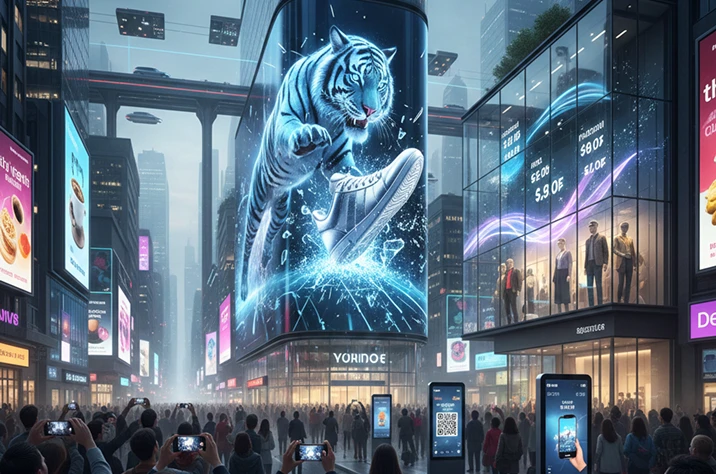
The static billboard is a relic of the past. Today, LED technology has transformed “Out-of-Home” (OOH) advertising into a dynamic, intelligent, and immersive communication channel. Modern LED screens are no longer just digital posters; they are responsive canvases that blend physical architecture with digital storytelling.
Here are the key opportunities redefining how brands connect with audiences in the modern landscape.
1. The Rise of “Naked-Eye” 3D Anamorphic Displays
Perhaps the most viral trend in recent years, anamorphic illusions (or “forced perspective” 3D) allow brands to create visuals that appear to leap out of the screen without requiring 3D glasses.
- The Opportunity: Create “stop-and-stare” viral moments. A giant sneaker kicking through glass or a tiger walking out of a frame grabs attention in busy urban centers (like Times Square or Shibuya Crossing).
- Why it works: It turns an ad into an entertainment event, encouraging passersby to film the screen and share it on social media, earning massive organic reach beyond the physical location.
2. Programmatic Digital Out-of-Home (pDOOH)
Advertising is no longer about buying a “slot” for a month. Programmatic DOOH allows brands to bid on LED ad space in real-time, similar to online ads.
- The Opportunity: Precision targeting based on real-world triggers.
- Weather Triggers: A coffee brand can automatically bid for screen time only when the temperature drops below 10°C.
- Traffic Triggers: A streaming service can advertise audiobooks specifically during rush hour gridlock.
- Benefit: This eliminates wasted ad spend by ensuring your content only appears when the context is perfect.
3. Transparent & Architectural LED Integration
Modern “mesh” and transparent LED screens allow glass facades of skyscrapers, shopping malls, and showrooms to turn into video walls without blocking natural light for the people inside.
- The Opportunity: transform entire buildings into media assets.
- Retail Application: A clothing store can use a transparent LED window display to overlay digital pricing and dynamic effects onto physical mannequins standing behind the glass.
- Aesthetic Harmony: These screens blend into high-end architecture, making the advertising feel like a futuristic enhancement rather than an intrusive eyesore.
4. Hyper-Local & Context-Aware Content
With the integration of AI and IoT (Internet of Things) sensors, LED screens can now adapt content based on who is standing in front of them.
- The Opportunity: Dynamic content shifting.
- How it works: Sensors can detect crowd density or general demographics (completely anonymously). If a screen detects a younger crowd, it might switch the creative to a high-energy video edit. If it detects a lull in foot traffic, it might display a strong “Call to Action” discount to pull people in.
5. Interactive & Gamified Screens
The “look but don’t touch” rule no longer applies. Modern floor-standing LED kiosks and totem displays are increasingly touch-enabled or mobile-integrated.
- The Opportunity: Gamification and data collection.
- Example: A screen at a bus stop could feature a QR code that turns the user’s phone into a controller for a game played on the big LED screen.
- AR Integration: Users can stand in front of a screen (mirrored via camera) and virtually “try on” jackets, sunglasses, or makeup, bridging the gap between digital convenience and physical retail
Strategic Recommendations for Brands
- Prioritize Motion: The human eye is biologically wired to detect motion. Even subtle animations on an LED screen outperform static digital images by significant margins in recall rates.
- Think “Phygital”: The best LED campaigns bridge the physical and digital worlds. Use the screen to drive mobile traffic via QR codes or NFC tags.
- Sustainability Matters: Utilize newer, energy-efficient LED models (like MicroLED) that offer higher brightness with lower power consumption. This appeals to eco-conscious consumers and reduces operational costs.
Future Outlook
As pixel pitches (the distance between LED clusters) become smaller, we will see MicroLED walls that rival the resolution of high-end TVs, allowing for viewing distances of just a few feet. This will bring the power of massive LED advertising into smaller boutique spaces, elevators, and luxury lobbies.
Post you may like
 The Age of Digital Marketing: Transforming How Businesses ConnectDecember 1, 2025
 DOOH: The Evolution of Advertising in the Public SphereDecember 1, 2025
 Your Guide to the Next-Generation LED Display TechnologiesDecember 1, 2025
 Beyond the Billboard: Technologies Rewriting the DNA of AdvertisingDecember 1, 2025
 How LED Screens Can Revolutionize Business AdvertisingDecember 1, 2025